

A rotary electric actuator is a crucial device in various industrial applications, providing precise and reliable rotational motion. As a supplier of rotary electric actuators, I have in - depth knowledge of the key components that make up these remarkable pieces of equipment. In this blog, I will delve into the main elements of a rotary electric actuator, explaining their functions and importance.
1. Electric Motor
The electric motor is the heart of a rotary electric actuator. It converts electrical energy into mechanical energy, which is then used to drive the rotational movement of the actuator. There are different types of electric motors that can be used in rotary electric actuators, such as DC motors and AC motors.
DC motors are known for their high starting torque and excellent speed control. They are often used in applications where precise positioning and rapid acceleration are required. For example, in robotic arms, DC - powered rotary electric actuators can quickly and accurately move the arm to the desired position.
On the other hand, AC motors are more commonly used in industrial settings due to their simplicity, reliability, and lower cost. They are suitable for continuous - operation applications where high power and constant speed are needed. For instance, in conveyor systems, AC - driven rotary electric actuators can rotate the conveyor rollers at a consistent speed.
2. Gearbox
The gearbox is another essential component of a rotary electric actuator. Its main function is to reduce the speed of the electric motor and increase the torque. By doing so, it allows the actuator to generate the necessary force to perform its intended task.
There are several types of gearboxes used in rotary electric actuators, including planetary gearboxes, worm gearboxes, and spur gearboxes. Planetary gearboxes are popular because of their high efficiency, compact size, and high torque - to - weight ratio. They are often used in applications where space is limited, such as in aerospace and automotive industries.
Worm gearboxes, on the other hand, provide a high reduction ratio and self - locking feature. This makes them suitable for applications where the actuator needs to hold its position without the need for additional braking mechanisms. For example, in valve control systems, worm gear - equipped rotary electric actuators can keep the valve in a specific position even when the power is off.
Spur gearboxes are simple and cost - effective. They are commonly used in applications where moderate torque and speed reduction are required. For example, in small - scale automation systems, spur gear - based rotary electric actuators can be used to rotate small components.
3. Controller
The controller is responsible for regulating the operation of the rotary electric actuator. It receives input signals from sensors or other control devices and sends appropriate commands to the electric motor to achieve the desired rotational motion.
A good controller should be able to provide precise control over the actuator's speed, position, and torque. It can also incorporate advanced features such as feedback control, which uses sensors to continuously monitor the actuator's position and adjust the motor's operation accordingly.
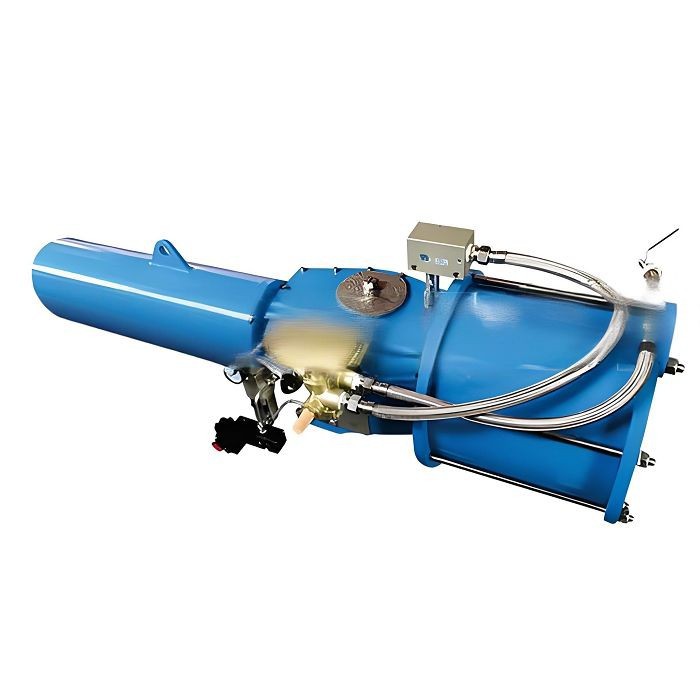

There are different types of controllers available for rotary electric actuators, including programmable logic controllers (PLCs) and dedicated motion controllers. PLCs are widely used in industrial automation because of their flexibility and ability to interface with other industrial devices. They can be programmed to perform complex control sequences, making them suitable for large - scale manufacturing processes.
Dedicated motion controllers, on the other hand, are specifically designed for controlling the motion of actuators. They offer more advanced motion control algorithms and features, such as trajectory planning and electronic gearing. These controllers are often used in high - precision applications, such as in semiconductor manufacturing and medical equipment.
4. Sensors
Sensors play a vital role in the operation of a rotary electric actuator. They provide feedback to the controller about the actuator's position, speed, and torque, allowing for precise control and monitoring.
One of the most commonly used sensors in rotary electric actuators is the encoder. An encoder is a device that measures the angular position of the actuator's shaft. It can be either incremental or absolute. Incremental encoders provide information about the change in position, while absolute encoders can directly provide the absolute position of the shaft. Encoders are essential for applications where accurate positioning is required, such as in CNC machines and robotic systems.
Torque sensors are another type of sensor used in rotary electric actuators. They measure the torque applied to the actuator's shaft, allowing the controller to adjust the motor's output to prevent overloading. This is particularly important in applications where the load on the actuator can vary, such as in material handling systems.
5. Housing and Mounting
The housing of a rotary electric actuator serves several important functions. It protects the internal components from environmental factors such as dust, moisture, and mechanical damage. It also provides a mounting structure for the actuator, allowing it to be easily installed in different applications.
The housing is typically made of materials such as aluminum or stainless steel, which offer good strength and corrosion resistance. The design of the housing should also take into account factors such as heat dissipation, as the electric motor and other components can generate heat during operation.
Proper mounting is crucial for the performance and longevity of the rotary electric actuator. The actuator should be mounted securely to ensure that it can transmit the rotational motion effectively and without excessive vibration. Different mounting options are available, including flange mounting, foot mounting, and face mounting, depending on the specific application requirements.
Comparison with Other Actuators
It's also important to understand how rotary electric actuators compare with other types of actuators. For example, Rack and Pinion Pneumatic Actuator uses compressed air to generate linear or rotary motion. Pneumatic actuators are known for their fast operation and simplicity. However, they may not offer the same level of precision and control as rotary electric actuators.
Skotch Yoke Actuator is another type of actuator that can convert linear motion into rotary motion. Skotch yoke actuators are often used in applications where high torque is required. But they may have more complex mechanical structures compared to rotary electric actuators.
In contrast, Rotary Electric Actuator offers precise control, high efficiency, and the ability to integrate with advanced control systems. These features make them suitable for a wide range of applications, from small - scale automation to large - scale industrial processes.
Conclusion
In conclusion, a rotary electric actuator is a complex device composed of several key components, each playing a crucial role in its operation. The electric motor provides the power, the gearbox adjusts the speed and torque, the controller regulates the operation, the sensors provide feedback, and the housing and mounting ensure protection and proper installation.
If you are in the market for a rotary electric actuator or have any questions about our products, I encourage you to reach out to us for a detailed discussion. We can provide you with the right solution based on your specific application requirements. Whether you need a high - precision actuator for a robotic system or a reliable actuator for an industrial valve, we have the expertise and products to meet your needs. Let's start a conversation about your procurement needs and find the best rotary electric actuator solution for you.
References
- "Industrial Automation Handbook", John Wiley & Sons
- "Motion Control Engineering", Elsevier
- Technical documents from leading actuator manufacturers