

Hey there! As a supplier of Rotary Electric Actuators, I often get asked about the current consumption of these nifty devices. So, I thought I'd sit down and write a blog post to shed some light on this topic.
First off, let's quickly go over what a Rotary Electric Actuator is. It's a device that converts electrical energy into mechanical rotation. These actuators are used in a wide range of applications, from industrial automation to automotive systems. They offer precise control, high efficiency, and long service life, which is why they're so popular.
Now, let's talk about current consumption. The current consumption of a Rotary Electric Actuator depends on several factors. One of the main factors is the size and power rating of the actuator. Larger actuators with higher power ratings generally consume more current than smaller ones. For example, a small Rotary Electric Actuator used in a home automation system might consume only a few milliamps, while a large industrial - grade actuator could draw several amps.
Another important factor is the load on the actuator. If the actuator is driving a heavy load, it will need to work harder, and thus consume more current. Think of it like a car. If you're driving uphill or towing a heavy trailer, your car's engine has to work harder and uses more fuel. Similarly, when a Rotary Electric Actuator has to move a large or resistant object, it requires more electrical power.
The operating speed of the actuator also affects current consumption. Faster - moving actuators typically consume more current because they need to generate more torque in a shorter period of time. If you set your actuator to run at a high speed, you can expect the current draw to increase.
Let's take a look at some typical scenarios. In a static or idle state, a Rotary Electric Actuator usually consumes a very low amount of current. This is because it's not actively moving or doing any work. It's just sitting there, waiting for a command. However, when you send a signal to the actuator to start rotating, the current consumption spikes. This initial spike is due to the actuator overcoming the inertia of the load and getting it moving.
Once the actuator is up and running at a steady speed, the current consumption stabilizes. The amount of current it draws at this point depends on the factors we mentioned earlier, like the load and the speed. If you suddenly increase the load or the speed during operation, the current will increase again.
Now, compared to other types of actuators, how does the current consumption of a Rotary Electric Actuator stack up? Well, let's take a look at the Skotch Yoke Actuator and the Rack and Pinion Pneumatic Actuator.
Skotch Yoke Actuators are often used in applications where high torque is required. They can be either pneumatic or hydraulic. Pneumatic Skotch Yoke Actuators rely on compressed air to operate. While they don't consume electrical current in the same way as a Rotary Electric Actuator, they do require a source of compressed air, which has its own energy costs associated with it. Hydraulic Skotch Yoke Actuators use hydraulic fluid, and the power source for the hydraulic system (usually an electric motor) consumes electricity.
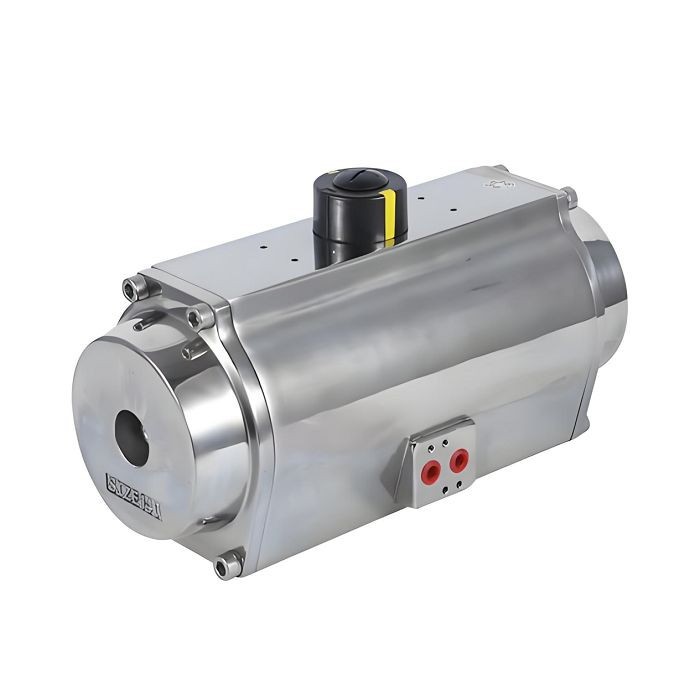
Rack and Pinion Pneumatic Actuators are also powered by compressed air. They are known for their simplicity and reliability. Similar to the pneumatic Skotch Yoke Actuators, they don't directly consume electrical current but rely on a compressed air system.
In general, Rotary Electric Actuators can be more energy - efficient than their pneumatic counterparts in some cases. This is because there are no losses associated with compressing air, which can be quite energy - intensive. However, the actual energy efficiency depends on the specific application and how the actuator is used.
If you're looking to optimize the current consumption of your Rotary Electric Actuator, there are a few things you can do. First, make sure you're using the right size actuator for your application. Using an oversized actuator will result in unnecessary current consumption. Second, try to minimize the load on the actuator. You can do this by using proper gearing or reducing friction in the system.
Also, consider the operating speed. If you don't need your actuator to run at full speed all the time, set it to a lower speed. This can significantly reduce the current consumption. Additionally, using a high - quality actuator with efficient motor design can also help in reducing energy usage.
As a supplier of Rotary Electric Actuators, I understand that every application is unique. That's why we offer a wide range of actuators with different power ratings, sizes, and features. Whether you're working on a small - scale project or a large industrial application, we can help you find the right actuator for your needs.
If you're interested in learning more about our Rotary Electric Actuators or have questions about current consumption and how it relates to your specific project, don't hesitate to reach out. We're here to assist you in making the best choice for your application. Whether you're looking to purchase a single actuator or need a large - scale supply, we're ready to have a chat and discuss your requirements.

References:
- General knowledge of actuator technology and electrical engineering principles.
- Industry - specific research on actuator performance and energy consumption.