

In the realm of industrial automation and machinery, high - precision positioning systems play a crucial role. These systems are used in a wide range of applications, from semiconductor manufacturing to aerospace engineering, where the ability to position components with extreme accuracy is essential. One key component that often comes into consideration for such systems is the Rotary Electric Actuator. As a supplier of Rotary Electric Actuators, I am frequently asked whether these actuators can be effectively used in high - precision positioning systems. In this blog post, I will delve into the characteristics of Rotary Electric Actuators and explore their suitability for high - precision applications.
Understanding Rotary Electric Actuators
A Rotary Electric Actuator is a device that converts electrical energy into rotational motion. It typically consists of a motor, a gearbox (in some cases), and a control system. The motor provides the power, the gearbox can be used to adjust the speed and torque of the output, and the control system allows for precise regulation of the actuator's movement.
The Rotary Electric Actuator offers several advantages over other types of actuators. Firstly, it provides a high degree of controllability. Unlike some other actuator types, such as pneumatic or hydraulic actuators, electric actuators can be easily programmed to achieve specific rotational angles, speeds, and torques. This programmability makes them well - suited for applications where precise control is required.
Secondly, electric actuators are generally more energy - efficient. They only consume power when in operation, and modern electric actuator designs are optimized to minimize energy losses. This energy efficiency not only reduces operating costs but also makes them a more environmentally friendly choice.
Another advantage is the repeatability of electric actuators. They can consistently reproduce the same rotational movement over a large number of cycles. This repeatability is a critical factor in high - precision positioning systems, as it ensures that the same level of accuracy is maintained throughout the operation of the system.
Requirements of High - Precision Positioning Systems
High - precision positioning systems have several key requirements. Accuracy is perhaps the most obvious one. These systems need to be able to position components within a very small tolerance, often in the range of micrometers or even nanometers in some high - tech applications. For example, in semiconductor manufacturing, the positioning of wafers during the lithography process must be extremely precise to ensure the proper functioning of the integrated circuits.
Repeatability is also essential. The system must be able to return to the same position accurately every time it is commanded to do so. This is crucial for processes that involve multiple steps or cycles, as any deviation in position can lead to defects in the final product.
Speed and acceleration control are important as well. In some applications, the actuator needs to move quickly to a specific position, while in others, a slow and controlled movement is required. The ability to adjust the speed and acceleration of the actuator allows for greater flexibility in the design and operation of the positioning system.
Can Rotary Electric Actuators Meet the Requirements?
When it comes to accuracy, Rotary Electric Actuators can achieve a high level of precision. Modern electric actuators are equipped with high - resolution encoders that can provide feedback on the rotational position of the actuator. This feedback is used by the control system to make real - time adjustments and ensure that the actuator reaches the desired position with high accuracy. For example, some high - end Rotary Electric Actuators can achieve angular accuracies of ±0.01 degrees or even better.
In terms of repeatability, as mentioned earlier, electric actuators are well - known for their ability to consistently reproduce the same movement. The use of closed - loop control systems, which continuously monitor and adjust the actuator's position based on the encoder feedback, further enhances the repeatability of the actuator. This makes them highly suitable for high - precision positioning systems where repeatability is a critical requirement.
Speed and acceleration control is also a strength of Rotary Electric Actuators. The control system of an electric actuator can be easily programmed to adjust the speed and acceleration of the actuator according to the specific requirements of the application. This allows for smooth and precise movements, whether the actuator needs to move quickly to a position or perform a slow and delicate adjustment.
Comparison with Other Actuator Types
To better understand the suitability of Rotary Electric Actuators for high - precision positioning systems, it is useful to compare them with other common actuator types, such as Rack and Pinion Pneumatic Actuator and Skotch Yoke Actuator.
Pneumatic actuators, like the Rack and Pinion Pneumatic Actuator, use compressed air to generate motion. While they are relatively simple and inexpensive, they often lack the precision and controllability required for high - precision positioning systems. Pneumatic actuators are more prone to variations in pressure, which can lead to inconsistencies in the movement of the actuator. Additionally, the response time of pneumatic actuators can be slower compared to electric actuators, making them less suitable for applications that require fast and precise movements.
Skotch Yoke Actuators are another type of actuator commonly used in industrial applications. They are typically used for applications that require high torque and relatively large angular displacements. However, they may not offer the same level of precision and controllability as Rotary Electric Actuators. The mechanical design of Skotch Yoke Actuators can introduce some backlash and play, which can affect the accuracy and repeatability of the actuator's movement.
Applications of Rotary Electric Actuators in High - Precision Positioning Systems
Rotary Electric Actuators are already being used in a variety of high - precision positioning applications. In the field of robotics, they are used to control the joints of robotic arms, allowing for precise and coordinated movements. This is essential for tasks such as pick - and - place operations in manufacturing plants or surgical procedures in the medical field.
In the aerospace industry, Rotary Electric Actuators are used in the control of aircraft flaps, ailerons, and other flight control surfaces. The high precision and reliability of these actuators are crucial for ensuring the safe and efficient operation of the aircraft.
In the field of optics, Rotary Electric Actuators are used to position lenses and mirrors with extreme accuracy. This is important for applications such as telescopes, microscopes, and laser systems, where precise alignment of optical components is required to achieve the desired performance.
Considerations for Using Rotary Electric Actuators in High - Precision Positioning Systems
While Rotary Electric Actuators offer many advantages for high - precision positioning systems, there are also some considerations that need to be taken into account.
Firstly, the environment in which the actuator will operate can have an impact on its performance. For example, in harsh industrial environments, the actuator may be exposed to dust, moisture, and high temperatures. In such cases, it is important to choose an actuator that is designed to withstand these environmental conditions. Some electric actuators are available with special enclosures and coatings to protect them from these elements.

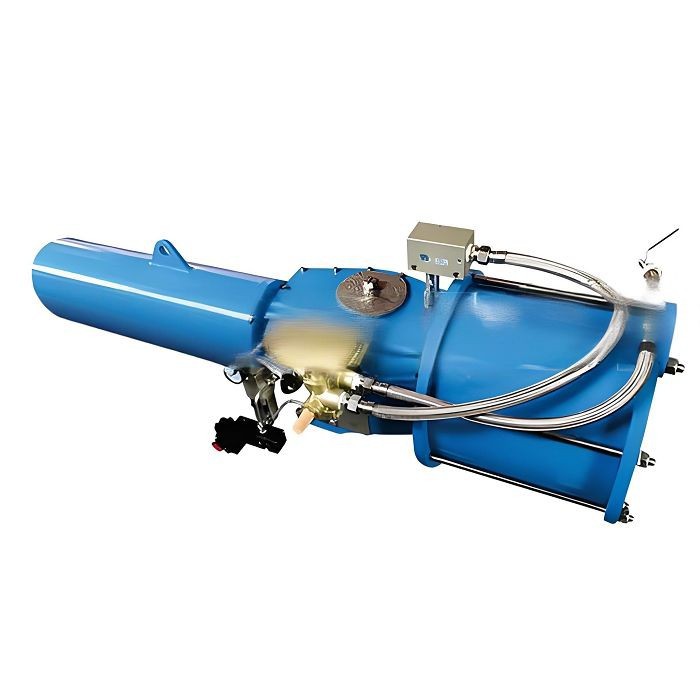
Secondly, the load characteristics of the application need to be carefully considered. The actuator must be able to handle the torque and inertia requirements of the load. If the load is too heavy or has a high moment of inertia, it may be necessary to select an actuator with a higher torque rating or to use a gearbox to increase the available torque.
Finally, the integration of the actuator into the overall system is crucial. The control system of the actuator needs to be compatible with the other components of the positioning system, such as sensors, controllers, and power supplies. Proper wiring, grounding, and calibration are also essential to ensure the accurate and reliable operation of the system.
Conclusion
In conclusion, Rotary Electric Actuators can indeed be used in high - precision positioning systems. Their high degree of controllability, accuracy, repeatability, energy efficiency, and other advantages make them well - suited for a wide range of high - precision applications. When compared to other actuator types, they offer a superior combination of performance and precision.
However, careful consideration needs to be given to the specific requirements of the application, the environmental conditions, and the integration of the actuator into the overall system. As a supplier of Rotary Electric Actuators, we have the expertise and experience to help you select the right actuator for your high - precision positioning needs. If you are interested in learning more about our Rotary Electric Actuators or discussing your specific application requirements, we invite you to contact us for a detailed consultation. We look forward to working with you to find the best solution for your high - precision positioning system.
References
- "Industrial Automation Handbook", Second Edition, edited by Thomas Kurfess
- "Actuators: Principles and Applications" by John A. Parr
- Technical documentation from various actuator manufacturers