

Hey there! As an actuator supplier, I'm super excited to break down how a hydraulic - electric hybrid actuator operates. It's a pretty cool piece of tech, and I'll do my best to explain it in a way that's easy to understand.
Let's start with the basics. An actuator is a device that converts energy into motion. In the case of a hydraulic - electric hybrid actuator, it combines the power of hydraulic systems with the precision and control of electric systems. This combination offers some really great advantages, like high force output, fast response times, and energy efficiency.
How It All Comes Together
First off, let's talk about the hydraulic part. Hydraulic systems use a fluid, usually oil, to transmit power. They work based on Pascal's law, which states that when pressure is applied to a confined fluid, the pressure change is transmitted equally throughout the fluid. In a hydraulic - electric hybrid actuator, the hydraulic system is responsible for generating high forces.
The hydraulic pump is the heart of the hydraulic side of things. It takes in fluid from a reservoir and pressurizes it. This pressurized fluid is then sent to hydraulic cylinders or motors, which convert the fluid's energy into mechanical motion. The great thing about hydraulic systems is that they can generate a huge amount of force in a relatively small space. This makes them ideal for applications where you need to move heavy loads, like in industrial machinery or construction equipment.
Now, let's move on to the electric part. Electric systems are all about precision and control. They use electric motors to generate motion. Electric motors are highly efficient and can be controlled very accurately. In a hydraulic - electric hybrid actuator, the electric system is used to control the flow and pressure of the hydraulic fluid.
The electric motor drives a pump or a valve that regulates the flow of the hydraulic fluid. By controlling the flow and pressure, the electric system can precisely control the speed, direction, and position of the actuator. This level of control is crucial in applications where you need to perform complex tasks with high accuracy, like in robotics or aerospace.
The Operation Process
So, how does the hydraulic - electric hybrid actuator actually operate? Well, it all starts with the control signal. When the actuator receives a control signal, usually from a controller or a computer, the electric system kicks into action.
The electric motor starts running and drives the pump or valve that controls the hydraulic fluid. Depending on the control signal, the electric system adjusts the flow and pressure of the hydraulic fluid. If the actuator needs to move quickly, the electric system increases the flow of the hydraulic fluid. If it needs to move slowly or hold a specific position, the electric system reduces the flow or maintains a constant pressure.
As the hydraulic fluid flows through the system, it creates a force that moves the actuator. The actuator can either move linearly, like in a hydraulic cylinder, or rotationally, like in a hydraulic motor. The electric system continuously monitors the position and speed of the actuator and adjusts the hydraulic system accordingly to ensure that the actuator moves exactly as required.
Advantages of Hydraulic - Electric Hybrid Actuators
One of the biggest advantages of hydraulic - electric hybrid actuators is their energy efficiency. By combining the high - force capabilities of hydraulic systems with the efficiency of electric systems, these actuators can save a lot of energy compared to traditional hydraulic or electric actuators. The electric system can optimize the operation of the hydraulic system, reducing unnecessary energy consumption.
Another advantage is their high performance. Hydraulic - electric hybrid actuators can provide high force output with fast response times and high precision. This makes them suitable for a wide range of applications, from heavy - duty industrial machinery to high - tech aerospace systems.
They also offer better controllability. With the electric system's ability to precisely control the hydraulic system, operators can perform complex tasks with ease. This is especially important in applications where safety and accuracy are critical, like in medical devices or automotive manufacturing.
Different Types of Actuators We Offer
As an actuator supplier, we offer a variety of actuators to meet different customer needs. For example, we have the Skotch Yoke Actuator. This type of actuator is known for its simple and robust design. It uses a scotch yoke mechanism to convert linear motion into rotary motion. It's commonly used in valve actuating applications where a high - torque output is required.
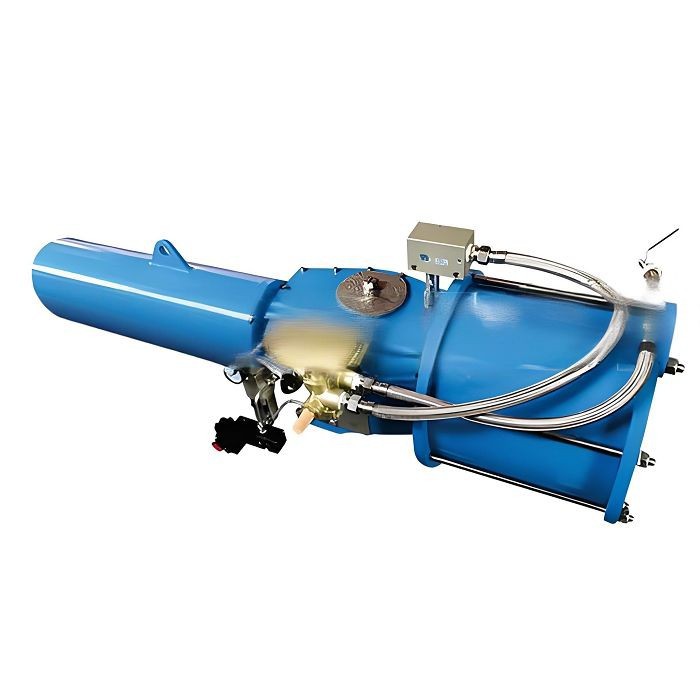

We also have the Rack and Pinion Pneumatic Actuator. This actuator uses compressed air to generate motion. It's a popular choice for applications where a fast and reliable actuation is needed, like in process control systems.
And of course, we have the Rotary Electric Actuator. This actuator uses an electric motor to generate rotary motion. It's highly precise and can be easily integrated into automated systems.
Applications
Hydraulic - electric hybrid actuators have a wide range of applications. In the industrial sector, they are used in manufacturing equipment, such as presses, injection molding machines, and conveyor systems. These actuators can handle heavy loads and provide the high - precision control needed for efficient production.
In the automotive industry, hydraulic - electric hybrid actuators are used in vehicle suspension systems, steering systems, and braking systems. They can improve the performance and safety of vehicles by providing better control and response.
In the aerospace industry, these actuators are used in aircraft flight control systems, landing gear systems, and cargo handling systems. The high - force output and precision control of hydraulic - electric hybrid actuators are essential for the safe and efficient operation of aircraft.
Conclusion
In conclusion, hydraulic - electric hybrid actuators are a remarkable piece of technology that combines the best of both hydraulic and electric systems. They offer high force output, fast response times, energy efficiency, and excellent control. Whether you're in the industrial, automotive, or aerospace sector, these actuators can provide the performance and reliability you need.
If you're interested in learning more about our actuators or have any questions about how they can be used in your applications, don't hesitate to reach out. We're here to help you find the perfect actuator solution for your needs. Let's start a conversation about your project and see how we can work together to make it a success.
References
- "Hydraulic and Pneumatic Systems" by John C. Parr
- "Electric Motor Drives: Modeling, Analysis, and Control" by Bin Wu