

Hey there! As an actuator supplier, I often get asked about how solenoid actuators work. So, I thought I'd break it down in this blog post.
Let's start with the basics. A solenoid actuator is a device that converts electrical energy into mechanical motion. It's a pretty nifty piece of tech that's used in a whole bunch of applications, from automotive systems to industrial machinery.
The Anatomy of a Solenoid Actuator
A solenoid actuator consists of a few key components. First off, there's the coil. This is basically a wire wound around a core, usually made of a ferromagnetic material like iron. When an electric current flows through the coil, it creates a magnetic field.
Next up is the plunger. This is a movable part that's made of a ferromagnetic material too. It's placed inside the coil. When the magnetic field is generated by the current in the coil, it exerts a force on the plunger, causing it to move.
There's also a spring in most solenoid actuators. The spring is used to return the plunger to its original position when the current is turned off. This is important because it allows the actuator to operate in a cyclic manner.
How It Operates
Now, let's get into the nitty - gritty of how a solenoid actuator actually operates. When you apply an electric current to the coil, the magnetic field is created. The strength of this magnetic field depends on the amount of current flowing through the coil and the number of turns in the coil.
The magnetic field then attracts the plunger towards the center of the coil. This movement of the plunger is what creates the mechanical output of the actuator. The force exerted on the plunger can be calculated using Ampere's law and the properties of the magnetic materials involved.
Once the current is removed from the coil, the magnetic field collapses. The spring then comes into play, pushing the plunger back to its original position. This back - and - forth motion can be used to perform various tasks, like opening or closing a valve, or engaging or disengaging a clutch.
Types of Solenoid Actuators
There are different types of solenoid actuators, each with its own unique characteristics and applications.
Linear Solenoid Actuators
Linear solenoid actuators produce a straight - line motion. They're commonly used in applications where a simple push - pull action is required. For example, in vending machines, they can be used to release products. In automotive systems, they can be used to control the operation of small valves.
Rotary Solenoid Actuators
Rotary solenoid actuators, on the other hand, produce a rotational motion. They're often used in applications where a quick and precise angular movement is needed. For instance, in robotics, they can be used to control the movement of joints.

Advantages of Solenoid Actuators
One of the biggest advantages of solenoid actuators is their simplicity. They have relatively few moving parts, which means they're less likely to break down. This makes them reliable and cost - effective in the long run.
They also offer fast response times. Since the magnetic field is created almost instantly when the current is applied, the actuator can start moving right away. This is crucial in applications where quick action is required, like in emergency shut - off valves.
Another advantage is their ability to operate in a wide range of environments. They can work in high - temperature, high - pressure, and even corrosive environments, as long as they're properly designed and protected.
Applications in Different Industries
Solenoid actuators are used in a variety of industries. In the automotive industry, they're used in things like fuel injectors, door locks, and transmission control systems. In the aerospace industry, they can be found in flight control systems and landing gear mechanisms.
In the medical industry, solenoid actuators are used in devices like infusion pumps and surgical instruments. They offer precise control and reliability, which are essential in medical applications.
In the industrial sector, they're used in conveyor systems, packaging machines, and automated assembly lines. Their ability to provide quick and accurate motion makes them ideal for these types of applications.
Comparing with Other Actuators
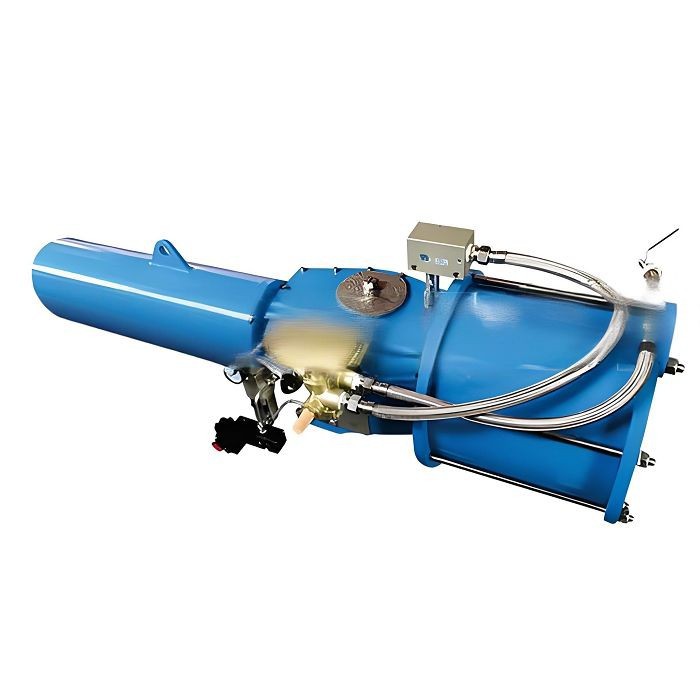
It's also worth comparing solenoid actuators with other types of actuators. For example, Skotch Yoke Actuator is a type of actuator that converts linear motion into rotary motion. While it can provide high torque, it's generally more complex and may require more maintenance compared to solenoid actuators.
Rotary Electric Actuator offers precise control of rotational motion. However, they can be more expensive and may require more sophisticated control systems.
Rack and Pinion Pneumatic Actuator uses compressed air to generate motion. They're powerful and can be used in heavy - duty applications, but they require an air supply system, which adds to the complexity and cost.
Conclusion
So, there you have it! That's how a solenoid actuator operates. It's a simple yet effective device that has a wide range of applications across different industries.
If you're in the market for actuators, whether it's solenoid actuators or other types, we're here to help. We're a reliable actuator supplier with a wide range of products to meet your needs. Whether you need a small actuator for a consumer product or a large - scale actuator for an industrial application, we've got you covered.
Don't hesitate to reach out to us for more information or to start a procurement discussion. We're always happy to talk about how our actuators can fit into your projects.
References
- Electromechanical Actuators: Fundamentals, Modeling, Design, and Applications by Peter C. Sen.
- Mechatronics: An Integrated Approach by David Crolla.