

Hey there! I'm an actuator supplier, and I know how crucial it is to have your actuators calibrated correctly. Calibration ensures that your actuators perform at their best, giving you accurate and reliable operation. In this blog, I'll walk you through the steps on how to calibrate an actuator, so let's get started!
Understanding Actuators
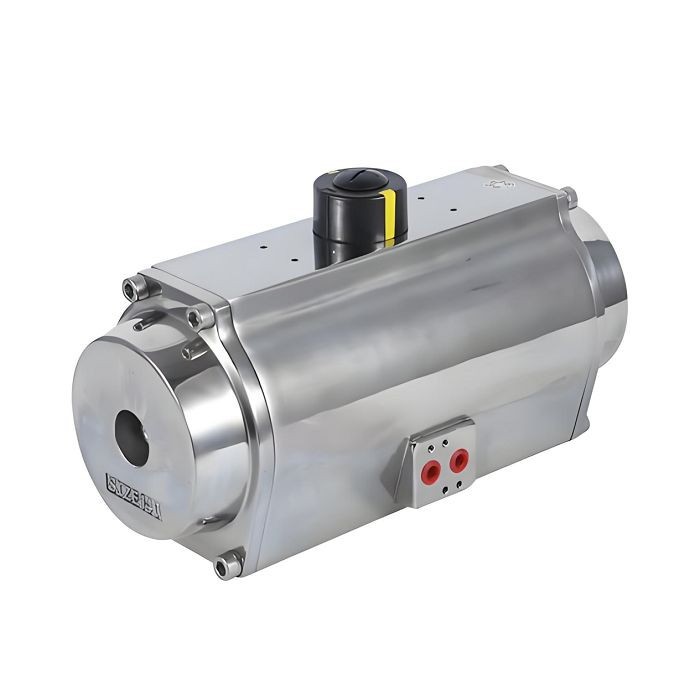
Before we dive into calibration, let's quickly go over what actuators are. Actuators are devices that convert energy into motion. They're used in a wide range of applications, from industrial machinery to automotive systems. There are different types of actuators, like the Skotch Yoke Actuator, Rotary Electric Actuator, and Rack and Pinion Pneumatic Actuator. Each type has its own unique characteristics and calibration requirements.
Why Calibration Matters
Calibration is like giving your actuator a tune-up. It helps to:
- Improve Accuracy: Ensures that the actuator moves to the exact position you need it to.
- Enhance Performance: Keeps the actuator running smoothly and efficiently.
- Increase Reliability: Reduces the risk of breakdowns and costly repairs.
- Meet Standards: In some industries, calibration is required to meet safety and quality standards.
Pre - Calibration Checks
Before you start calibrating your actuator, there are a few things you need to do:
- Inspect the Actuator: Look for any visible damage, such as cracks, leaks, or loose parts. If you find any issues, fix them before proceeding with calibration.
- Check the Power Supply: Make sure the actuator is getting the correct voltage or pressure. Incorrect power can affect calibration and performance.
- Review the Manual: Every actuator is different, so it's important to read the manufacturer's manual. It will give you specific instructions on calibration and any special requirements.
Calibration Steps
Step 1: Initial Setup
- Mount the Actuator: Make sure the actuator is securely mounted in its intended position. A loose mount can cause inaccurate readings during calibration.
- Connect the Controller: If your actuator is controlled by a controller, connect it properly. Ensure all the wiring is correct and there are no loose connections.
Step 2: Zero Point Calibration
- Find the Zero Position: For most actuators, the zero position is the starting point of its movement. This could be the fully closed or fully open position, depending on the type of actuator.
- Set the Zero Point: Use the controller or calibration tool to set the zero position. This may involve adjusting potentiometers, using software commands, or following a specific sequence of steps.
Step 3: Full - Stroke Calibration
- Move the Actuator to the Full - Stroke Position: This is the maximum distance the actuator can travel. For linear actuators, it's the full extension or retraction; for rotary actuators, it's the full rotation.
- Measure the Position: Use a measuring device, such as a ruler or a position sensor, to measure the actual position of the actuator. Compare this measurement with the expected position.
- Adjust the Calibration: If there is a difference between the actual and expected positions, adjust the calibration settings. This may involve changing gain settings, offset values, or other parameters.
Step 4: Intermediate Point Calibration
- Select Intermediate Points: Choose a few points between the zero and full - stroke positions. These points will help you ensure that the actuator moves accurately throughout its entire range of motion.
- Measure and Adjust: Repeat the measurement and adjustment process for each intermediate point. Make small adjustments as needed to improve accuracy.
Step 5: Repeatability Testing
- Perform Multiple Cycles: Run the actuator through several cycles of movement, from the zero position to the full - stroke position and back.
- Check for Consistency: Measure the position of the actuator at each point during each cycle. The readings should be consistent within an acceptable tolerance. If there is significant variation, further calibration or adjustment may be required.
Calibration Tools
There are various tools you can use to calibrate an actuator:
- Multimeter: Used to measure voltage, current, and resistance.
- Pressure Gauge: For pneumatic or hydraulic actuators, a pressure gauge helps to ensure the correct pressure is being applied.
- Position Sensor: This can be a linear encoder, rotary encoder, or other type of sensor that measures the position of the actuator.
- Calibration Software: Many modern actuators come with calibration software that simplifies the process and provides more accurate results.
Troubleshooting Calibration Issues
Even with careful calibration, you may encounter some issues. Here are some common problems and how to fix them:
- Inaccurate Readings: Check for loose connections, damaged sensors, or incorrect power supply. Make sure the measuring device is accurate and properly calibrated.
- Poor Repeatability: This could be due to mechanical wear, improper lubrication, or incorrect calibration settings. Inspect the actuator for wear and tear, lubricate moving parts if necessary, and re - check the calibration settings.
- Actuator Not Moving: Check the power supply, controller settings, and any safety interlocks. Make sure there are no blockages or obstructions preventing the actuator from moving.
Conclusion
Calibrating an actuator is an important process that can significantly improve its performance and reliability. By following the steps outlined in this blog, you can ensure that your actuator is calibrated correctly and running at its best.
If you're in the market for a new actuator or need help with calibration, don't hesitate to reach out. We're here to assist you with all your actuator needs. Whether you're looking for a Skotch Yoke Actuator, Rotary Electric Actuator, or Rack and Pinion Pneumatic Actuator, we've got you covered. Contact us to discuss your requirements and start a procurement conversation today!

References
- Manufacturer's manuals for various actuators.
- Industry standards and guidelines for actuator calibration.