

Hey there! As a supplier of Rotary Electric Actuators, I often get asked about the materials used for the shaft of these nifty devices. So, I thought I'd take a deep dive into this topic and share what I know.
First off, let's quickly understand what a Rotary Electric Actuator is. A Rotary Electric Actuator is a device that converts electrical energy into rotational motion. It's used in a wide range of applications, from industrial automation to automotive systems. You can learn more about it on our website Rotary Electric Actuator.
Now, onto the main topic - the shaft material. The shaft is a crucial part of the Rotary Electric Actuator as it transfers the rotational force from the motor to the load. The choice of shaft material depends on several factors, including the application requirements, the operating environment, and the cost.
One of the most commonly used materials for the shaft of a Rotary Electric Actuator is stainless steel. Stainless steel is a popular choice because it offers a good combination of strength, corrosion resistance, and affordability. It can withstand high temperatures and harsh chemicals, making it suitable for a wide range of industrial applications. For example, in the food and beverage industry, where hygiene is a top priority, stainless steel shafts are often used because they can be easily cleaned and sanitized.
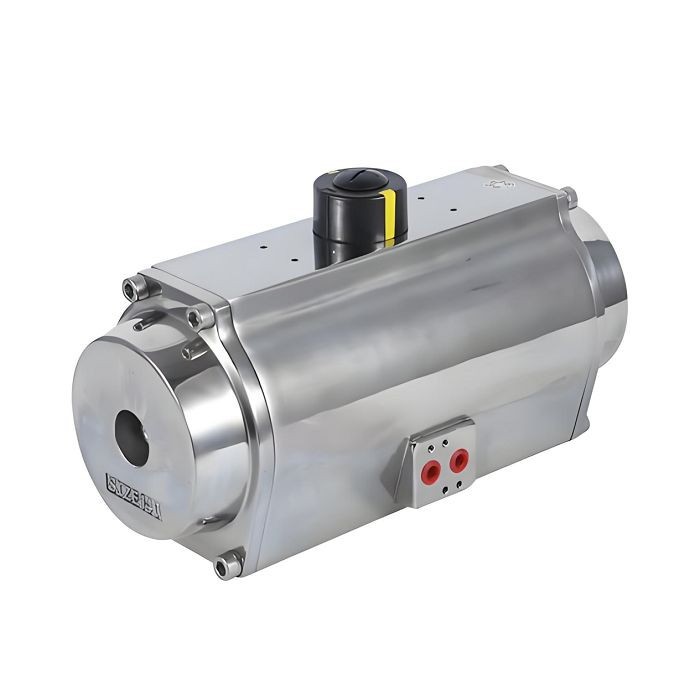

Another material that is sometimes used for the shaft is carbon steel. Carbon steel is known for its high strength and durability. It's a great choice for applications that require a lot of torque and where the shaft needs to withstand heavy loads. However, carbon steel is prone to corrosion, so it usually needs to be coated or treated to protect it from the elements. In some cases, a zinc or nickel coating is applied to the carbon steel shaft to improve its corrosion resistance.
For applications that require high precision and low friction, ceramic materials are sometimes used for the shaft. Ceramic shafts offer excellent wear resistance and can operate at high speeds without generating a lot of heat. They are also very lightweight, which can be an advantage in applications where weight is a concern. However, ceramic materials are more expensive than stainless steel or carbon steel, so they are typically used in high-end applications where the benefits justify the cost.
In addition to these materials, there are also some specialty materials that can be used for the shaft of a Rotary Electric Actuator. For example, titanium is a very strong and lightweight material that is often used in aerospace and military applications. It has excellent corrosion resistance and can withstand extreme temperatures. However, titanium is also very expensive, so it's not commonly used in everyday applications.
Now, let's compare the Rotary Electric Actuator with other types of actuators, such as the Skotch Yoke Actuator and the Rack and Pinion Pneumatic Actuator. The Skotch Yoke Actuator is a type of linear actuator that converts linear motion into rotational motion. You can learn more about it on our website Skotch Yoke Actuator. The Rack and Pinion Pneumatic Actuator, on the other hand, uses compressed air to generate linear or rotational motion. You can find more information about it on our website Rack and Pinion Pneumatic Actuator.
While these other types of actuators have their own advantages, the Rotary Electric Actuator offers several unique benefits. For example, it's more precise and controllable than pneumatic actuators, and it doesn't require a compressed air supply. It's also more energy-efficient than hydraulic actuators, and it can be easily integrated into automated systems.
So, if you're in the market for a Rotary Electric Actuator, or if you have any questions about the shaft material or other aspects of these devices, don't hesitate to reach out. We're here to help you find the right solution for your application. Whether you need a standard actuator or a custom-designed one, we have the expertise and experience to meet your needs.
In conclusion, the choice of shaft material for a Rotary Electric Actuator depends on several factors, including the application requirements, the operating environment, and the cost. Stainless steel, carbon steel, ceramic, and specialty materials like titanium are all options that can be used, each with its own advantages and disadvantages. By understanding the properties of these materials, you can make an informed decision about which one is right for your application.
If you're interested in learning more about our Rotary Electric Actuators or discussing your specific requirements, please feel free to contact us. We'd love to have a chat with you and see how we can help you with your next project.
References
- Engineering Materials Handbook, Volume 1: Composites, ASM International
- Materials Science and Engineering: An Introduction, William D. Callister Jr. and David G. Rethwisch