

Hey there! As a supplier of Rotary Electric Actuators, I often get asked about the energy - saving performance of these nifty devices. So, I thought I'd take a moment to break it down for you.
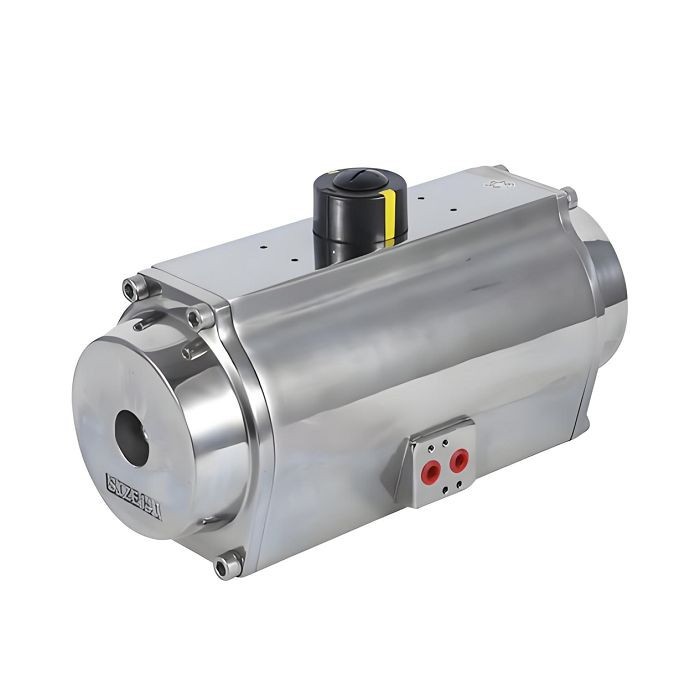
First off, let's understand what a Rotary Electric Actuator is. It's a device that converts electrical energy into mechanical rotational motion. These actuators are used in a wide range of applications, from industrial automation to home appliances. Compared to other types of actuators like the Rack and Pinion Pneumatic Actuator and the Skotch Yoke Actuator, Rotary Electric Actuators have some unique energy - saving advantages.
One of the key energy - saving features of a Rotary Electric Actuator is its high efficiency. Unlike pneumatic actuators that rely on compressed air, which can be quite energy - intensive to produce and maintain, electric actuators convert a large percentage of the electrical energy they consume into useful mechanical work. Most modern Rotary Electric Actuators have an efficiency rating of over 80%, which means that more than 80% of the electrical energy is used to drive the rotation, and less is wasted as heat.
Another aspect is the precise control that Rotary Electric Actuators offer. They can be programmed to operate at specific speeds and torques, which allows for optimal energy use. For example, in an industrial process where a valve needs to be opened or closed, the actuator can be set to move at just the right speed to complete the task without using excess energy. This is in contrast to pneumatic actuators, which often operate at a fixed pressure and may waste energy if the task doesn't require full power.
Rotary Electric Actuators also have the ability to stop and start quickly. When they're not in use, they consume very little power. In a system where actuators are used intermittently, this can lead to significant energy savings over time. For instance, in a conveyor belt system, the actuators can be turned off when the belt is not moving, reducing overall energy consumption.
Let's talk about the power consumption of Rotary Electric Actuators. These actuators typically have a lower power consumption compared to their pneumatic counterparts. Pneumatic systems require a compressor to generate and maintain the compressed air, which is a continuous energy - consuming process. On the other hand, Rotary Electric Actuators only draw power when they're in operation, and the power draw can be adjusted according to the load.
In addition to energy savings during operation, Rotary Electric Actuators also have a lower maintenance - related energy cost. Pneumatic systems often require regular maintenance to prevent air leaks, which can waste a significant amount of energy. Electric actuators, however, have fewer moving parts and are less prone to leaks, reducing the need for frequent maintenance and the associated energy consumption.
Now, let's look at some real - world examples of how Rotary Electric Actuators can save energy. In a manufacturing plant, Rotary Electric Actuators can be used to control the movement of robotic arms. By precisely controlling the speed and torque of the actuators, the robots can perform tasks more efficiently, using less energy. In a building automation system, these actuators can be used to control the opening and closing of windows and blinds. They can be programmed to adjust based on the amount of sunlight and temperature, saving on heating and cooling costs.
When it comes to comparing the energy - saving performance of Rotary Electric Actuators with other types of actuators, it's important to consider the specific application. In some cases, a pneumatic actuator might be more suitable, but in many applications, Rotary Electric Actuators offer a clear advantage in terms of energy efficiency.
If you're in the market for an energy - efficient actuator solution, I highly recommend considering a Rotary Electric Actuator. Our company offers a wide range of Rotary Electric Actuators that are designed to provide optimal energy - saving performance. Whether you're looking for an actuator for a small - scale project or a large - scale industrial application, we have the right product for you.
If you're interested in learning more about our Rotary Electric Actuators or want to discuss your specific needs, don't hesitate to reach out. We're always happy to have a chat and help you find the best solution for your energy - saving requirements.
References:

- General knowledge of actuator technology and energy efficiency principles.
- Technical specifications of Rotary Electric Actuators from industry sources.