

Hey there! As a supplier of Rotary Electric Actuator, I often get asked about the inertia ratio of these nifty devices. So, let's dive right in and break it down in a way that's easy to understand.
First off, what the heck is a Rotary Electric Actuator? Well, it's a device that converts electrical energy into mechanical rotational motion. These things are super useful in a whole bunch of industries, from manufacturing to robotics. They're known for their precision, reliability, and efficiency. You can use them to control valves, position components, and do all sorts of other cool stuff.
Now, let's talk about inertia. Inertia is basically an object's resistance to changes in its state of motion. In the context of a Rotary Electric Actuator, it refers to how hard it is to start, stop, or change the speed of the rotating part. The inertia ratio is the relationship between the load inertia and the actuator's rotor inertia.
Why is the inertia ratio so important? Well, if the inertia ratio is too high, it can cause all sorts of problems. The actuator might struggle to accelerate or decelerate the load, leading to slow response times and reduced accuracy. It could also put extra stress on the motor and other components, which can shorten their lifespan and increase the risk of breakdowns. On the other hand, if the inertia ratio is too low, the actuator might be overkill for the job, which can waste energy and money.
So, how do you calculate the inertia ratio? It's actually pretty simple. You just divide the load inertia by the actuator's rotor inertia. For example, if the load inertia is 10 kg·m² and the rotor inertia is 2 kg·m², the inertia ratio would be 5.
Now, what's a good inertia ratio? Well, that depends on the specific application. In general, a ratio between 3 and 10 is considered ideal for most applications. However, some applications might require a lower or higher ratio. For example, applications that require high-speed and high-precision positioning might need a lower ratio, while applications that involve heavy loads or slow speeds might be able to tolerate a higher ratio.
As a supplier, we understand that choosing the right Rotary Electric Actuator can be a daunting task. That's why we offer a wide range of products with different inertia ratios to suit your specific needs. Whether you're looking for a high-performance actuator for a demanding application or a cost-effective solution for a simple task, we've got you covered.
In addition to Rotary Electric Actuators, we also offer other types of actuators, such as Rack and Pinion Pneumatic Actuator and Skotch Yoke Actuator. Each type of actuator has its own advantages and disadvantages, so it's important to choose the one that's best suited for your application.
If you're still not sure which actuator is right for you, our team of experts is here to help. We can provide you with technical advice, product recommendations, and even custom solutions to meet your specific requirements. Just give us a call or send us an email, and we'll be happy to assist you.

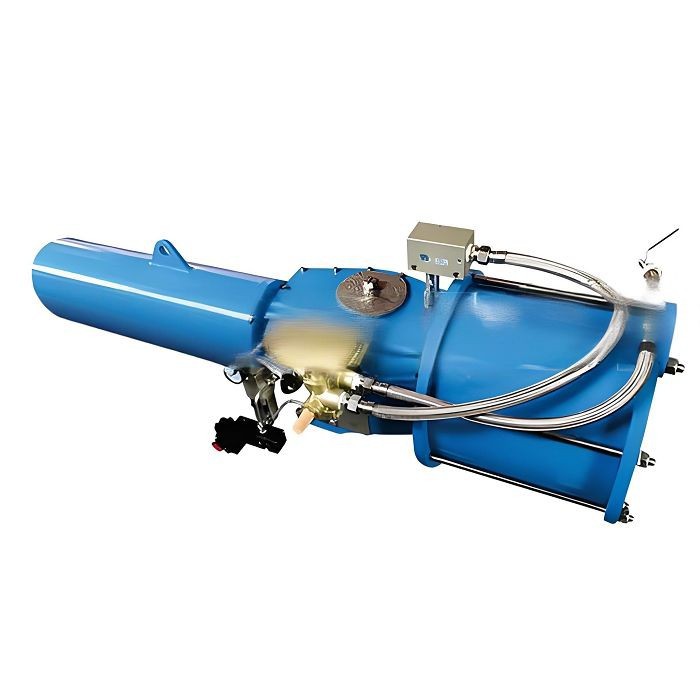
In conclusion, the inertia ratio is a crucial factor to consider when choosing a Rotary Electric Actuator. By understanding what it is and how it affects performance, you can make an informed decision and choose the right actuator for your application. And if you need any help along the way, don't hesitate to reach out to us. We're here to make your life easier and help you get the most out of your actuators.
If you're interested in learning more about our Rotary Electric Actuators or other products, please feel free to contact us. We'd love to have a chat with you and discuss your needs. Whether you're looking to make a purchase or just want to learn more, we're here to assist you. Let's work together to find the perfect solution for your application.
References
- Engineering textbooks on motion control and actuators
- Industry whitepapers on actuator performance and selection